Normal Blood Sugar Levels Chart by Age (India)

Normal Blood Sugar Levels Chart by Age (India)
Know the healthy blood sugar ranges for different age groups and understand when your test results may need medical attention.
Blood sugar is one of the most important health numbers to monitor for preventing diabetes, detecting it early, and managing it effectively. In India, many people undergo testing only after symptoms appear, but regular screening can identify abnormal blood sugar much earlier and help prevent long-term complications.
Understanding normal blood sugar levels by age helps you interpret your laboratory reports correctly and know when it is time to consult your doctor.
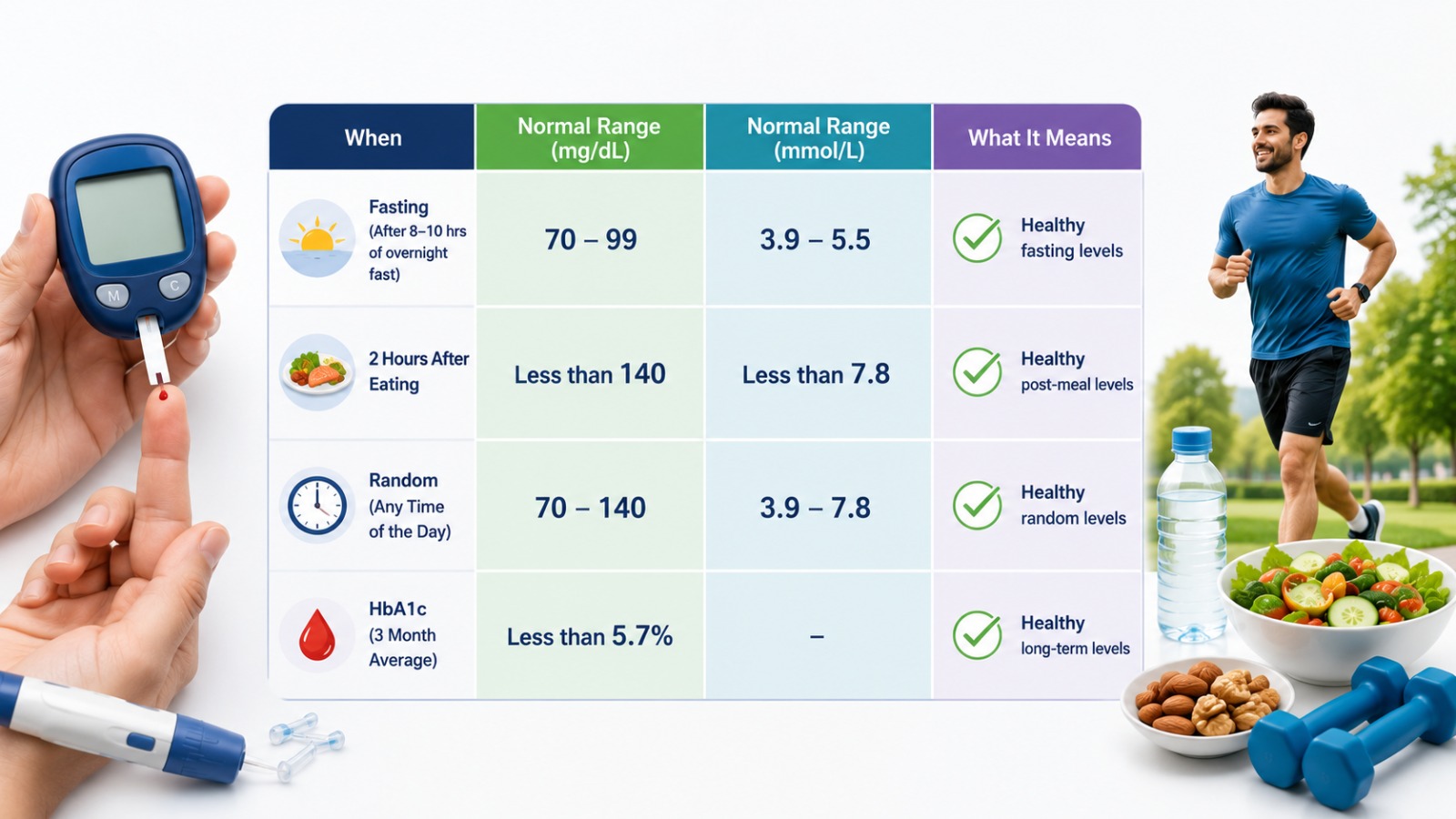
For healthy, non-pregnant adults, fasting blood sugar generally ranges between 70–99 mg/dL, while blood sugar measured 2 hours after a meal is usually below 140 mg/dL. An HbA1c below 5.7% is considered normal.
These values are educational guidelines. Individual blood sugar targets may vary depending on age, pregnancy, existing diabetes, and other medical conditions.
Normal Blood Sugar Levels by Age
| Age Group | Fasting Blood Sugar | 2 Hours After Meal | HbA1c |
|---|---|---|---|
| Children (6–12 Years) | Approximately 70–100 mg/dL | Below 140 mg/dL | Usually below 5.7% (Non-diabetic) |
| Teenagers (13–19 Years) | Approximately 70–100 mg/dL | Below 140 mg/dL | Usually below 5.7% |
| Adults (20–59 Years) | 70–99 mg/dL | Below 140 mg/dL | Below 5.7% |
| Older Adults (60+ Years) | 70–100 mg/dL (slightly higher targets may be appropriate in some individuals) | Usually below 140–160 mg/dL depending on overall health | Individualized by the treating physician |
Important Note
These are general reference values for people without diabetes. Individuals with diabetes may have personalized blood sugar targets based on age, medical conditions, medications, and risk of hypoglycemia.
Why Age Matters
Blood sugar goals are not identical for everyone.
- Children and teenagers require glucose targets that support healthy growth, physical activity, and brain development.
- Older adults may have slightly higher individualized targets to reduce the risk of low blood sugar (hypoglycemia), especially if they have heart disease, kidney disease, frailty, or previous hypoglycemic episodes.
For this reason, you should avoid comparing your blood sugar readings directly with someone else's. A healthy young adult and a 70-year-old with multiple medical conditions may require different treatment goals.
When Is Blood Sugar Considered High?
| Test | Normal | Prediabetes | Diabetes |
|---|---|---|---|
| Fasting Blood Sugar | 70–99 mg/dL | 100–125 mg/dL | 126 mg/dL or higher (on repeated testing) |
| 2-Hour Blood Sugar (OGTT/Post Meal) | Below 140 mg/dL | 140–199 mg/dL | 200 mg/dL or higher |
| HbA1c | Below 5.7% | 5.7–6.4% | 6.5% or higher |
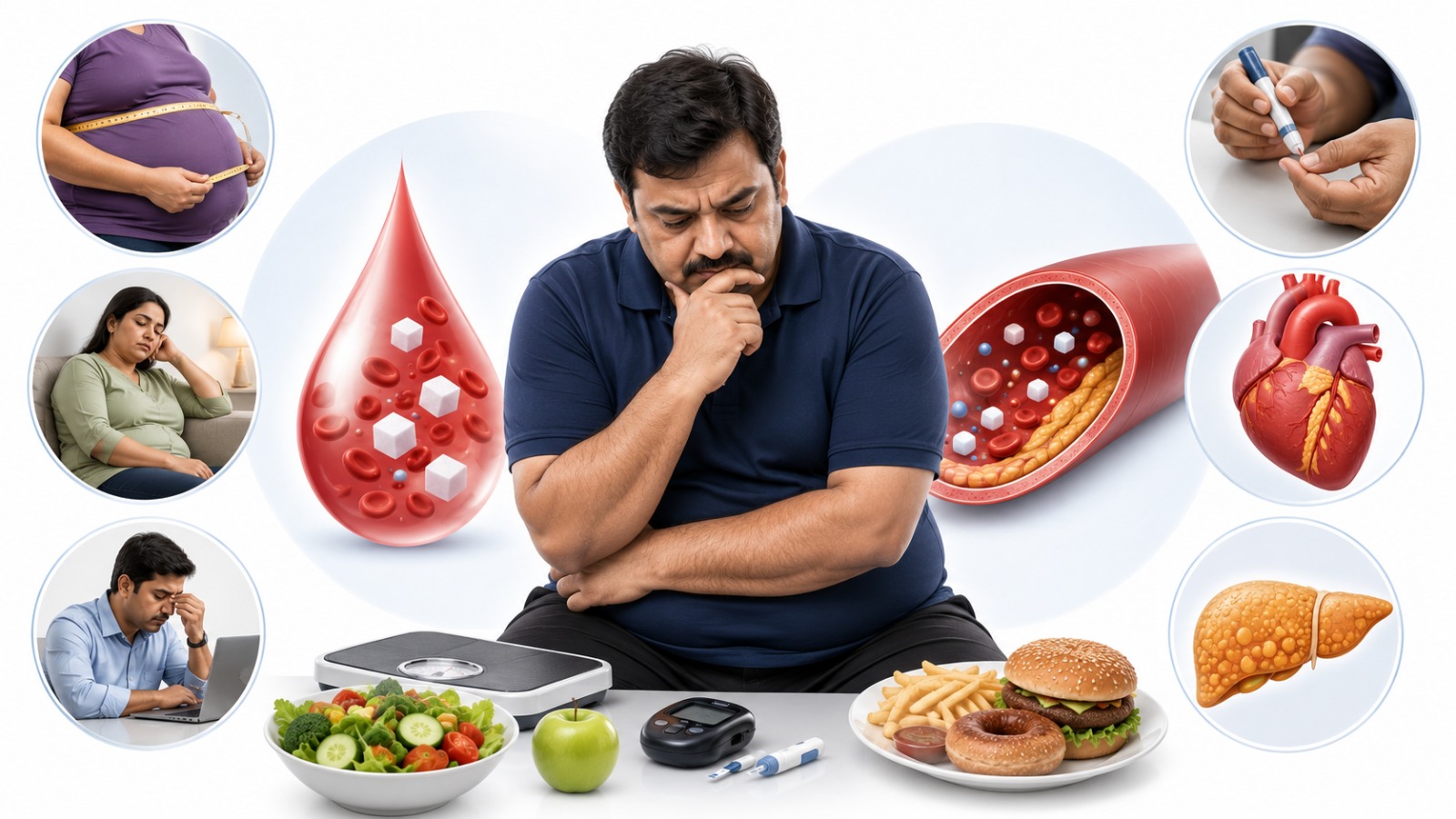
Many Indians with prediabetes have no symptoms. Regular screening is particularly important if you have abdominal obesity, a family history of diabetes, PCOS, previous gestational diabetes, or a sedentary lifestyle.
What Can Affect Blood Sugar Levels?
Blood sugar naturally changes throughout the day and can be influenced by many factors.
Common Factors That Raise Blood Sugar
- Large carbohydrate-rich meals
- Physical inactivity
- Stress and anxiety
- Poor sleep
- Fever or infections
- Certain medications (such as steroids)
- Underlying illnesses
For Indian diets, large portions of rice, roti, idli, dosa, poha, sweets, bakery products, and sugary beverages can cause significant post-meal blood sugar spikes if meals are not balanced with protein, fiber, and regular physical activity.
When Should You Consult a Doctor?
You should seek medical advice if your blood sugar readings repeatedly fall outside the normal range or if you develop symptoms suggestive of diabetes.
Consult a Doctor If:
- Fasting blood sugar remains above 100 mg/dL
- Post-meal blood sugar repeatedly exceeds 140 mg/dL
- HbA1c is 5.7% or higher
- You already have diabetes but your readings frequently remain above your target
- You experience excessive thirst, frequent urination, unexplained weight loss, blurred vision, fatigue, or recurrent infections
Early diagnosis allows timely lifestyle modifications and treatment, reducing the risk of complications affecting the heart, kidneys, eyes, and nerves.
Final Takeaway
Normal blood sugar levels depend on the type of test performed, the time of testing, age, and overall health. For most healthy Indian adults, fasting blood sugar should remain between 70–99 mg/dL, while blood sugar measured 2 hours after a meal should be below 140 mg/dL. Regular screening, healthy eating, physical activity, and timely medical consultation remain the most effective ways to prevent diabetes and maintain lifelong health.