Jaggery, Honey, Sugar or Stevia: What Should a Diabetic Choose?
The shelf offers four ways to sweeten food, and Indian households are told a different story about each: sugar is poison, jaggery is traditional and healthy, honey is medicine, stevia is the modern fix. For people with diabetes, three of those stories collapse under metabolic scrutiny — and the fourth comes with caveats.
1. Sugar (Sucrose)
The reference point: pure carbohydrate, roughly4 grams per teaspoon, raising blood glucose quickly with no micronutrients worth counting. Every sweetener decision is ultimately a comparison against this. The WHO recommendation — free sugars under10% of daily energy, ideally under5% — applies directly.
2. Jaggery: The Indian Health Halo That Isn't
Jaggery retains some minerals from cane processing — iron, potassium, trace amounts — which is the basis of its healthy reputation. Per spoon, though, its carbohydrate content is comparable to sugar (marginally more by weight), and its glycemic effect on a person with diabetes is essentially the same. The honest verdict: a slightly more nutritious way to consume sugar, not a diabetes-safe alternative. Using jaggery "because it is natural" is the single most common sweetener mistake in Indian diabetic households.
3. Honey: Same Metabolic Story, Better Marketing
Honey is about80% sugar (fructose and glucose) and raises blood glucose comparably to table sugar for most people. Its antioxidant trace compounds are real but small, and commercial honey is frequently adulterated with sugar syrups in India — studies of market samples have repeatedly found this. "Honey instead of sugar" changes flavour, not glucose. Diabetics should also never use honey as a hypo treatment preference over glucose tablets, and honey should be avoided entirely for children under one year for unrelated medical reasons.
4. Stevia and Intense Sweeteners
Stevia (and sucralose, aspartame, saccharin) provide sweetness with essentially zero carbohydrate, which is why major guidelines accept them as sugar substitutes. Practical notes: they are far more concentrated than sugar, so recipes need re-learning; some blends add dextrin or maltodextrin bulking agents that carry carbohydrate (check "excipients" on Indian packs); and taste adaptation takes about two weeks — after that, overly sweet things taste wrong. For a person with diabetes wanting tea sweetened, this is the option that actually delivers a glucose benefit.
5. The Decision Matrix
- Want no glucose impact: stevia or another high-purity intense sweetener — read for bulking agents
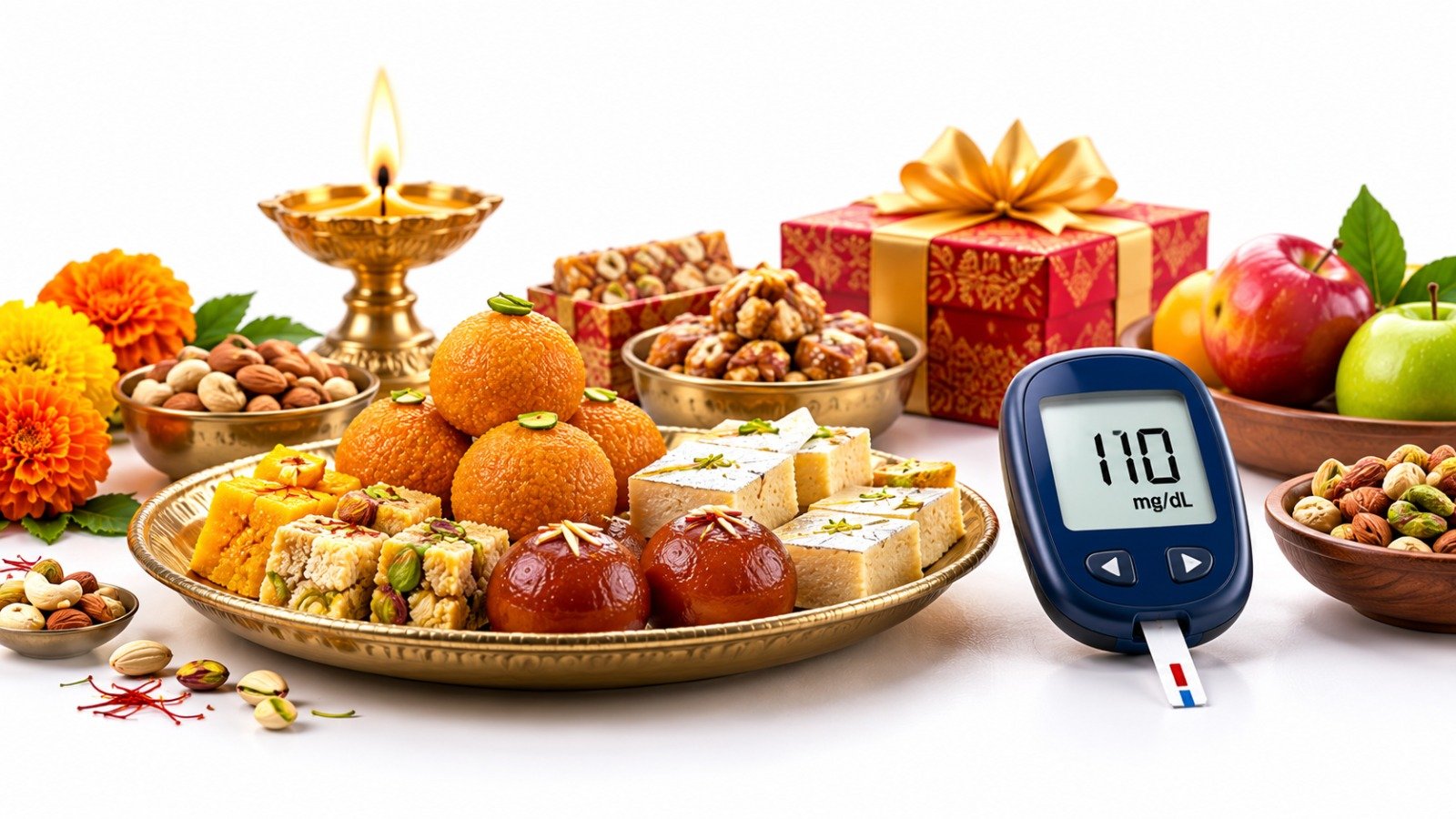
- Want tradition in small quantities: jaggery and honey are acceptable as FLAVOURS in festival food — measured in teaspoons, counted as carbohydrate, not as medicine
- Everyday tea and cooking: taper to unsweetened first; sweetener second; jaggery/honey/sugar all equivalent in impact
- Never: treating any of them as a treatment, cure, or free food
Final Takeaway
Metabolically, sugar, jaggery and honey land in nearly the same place — carbohydrate that raises glucose — while stevia-class sweeteners do not. Choose by that rule: intense sweeteners where you want zero impact, tiny measured amounts of jaggery or honey where you want tradition and flavour, and never a health claim between them. The honest label: sweeteners are for taste, not therapy.
Sources and References
- World Health Organization — Free sugars guidance (who.int)
- American Diabetes Association — Standards of Care: sweeteners and nutrition (diabetesjournals.org/care)
- ICMR–National Institute of Nutrition — Dietary Guidelines for Indians, free sugars (icmr.gov.in)
- Research Society for the Study of Diabetes in India (RSSDI) — Diet recommendations (rssdi.in)
Medical disclaimer: This article is for information and education only. Sweetener choices and quantities should be discussed with your doctor or dietitian, especially during pregnancy.
Looking for a Diabetes Specialist Near You?
Consult verified diabetologists for HbA1c control, personalized diet management, insulin therapy, and complications screening. Direct clinic contacts and WhatsApp assistance — zero booking fees.