Can Diabetics Eat Rice? The Best Way to Include It in an Indian Diet
It may be the most asked question in every diabetes clinic in India: "Doctor, can I eat rice at all?" The short answer is yes — rice has been eaten across this country for centuries, and it can be part of a diabetes-friendly plate. The longer answer is about variety, portion, pairing, and timing, and it is that longer answer which decides whether your post-meal sugar climbs sharply or stays steady.
1. Why Rice Has a Reputation
White polished rice is high in starch and low in fibre, and on the glycemic index it lands in the high range (roughly 70–80 for a typical serving). Starch from polished rice converts to glucose quickly, which is why a rice-only plate can produce a sharp two-hour post-meal spike. But glycemic index is measured for rice alone — nobody in India eats rice alone. What sits beside it on the plate changes the arithmetic completely.
2. Portion: The Number That Matters Most
- One serving of cooked rice is about three-quarters of a katori (roughly 150 g / a heaped small cup) — that carries around 30–35 g of carbohydrate
- A diabetic plate usually allows one serving of carbohydrate per meal — so one portion of rice, not a second helping
- Measure the first week with a katori; after that, eyeballing becomes reliable
3. Pairing: What Changes the Spike
- Protein first: dal, sambar, curd, fish or chicken alongside slow the glucose absorption of the same rice
- Vegetables half the plate before the rice portion — fibre blunts the rise
- Fermented and legume companions — sambar, rasam, curd are traditional partners for a reason; they lower the effective glycemic load of the meal
- Never a rice-only plate: curd rice and plain rice are the fastest-spiking versions; add vegetables and protein to them
4. Variety and Preparation: Where the Gains Are
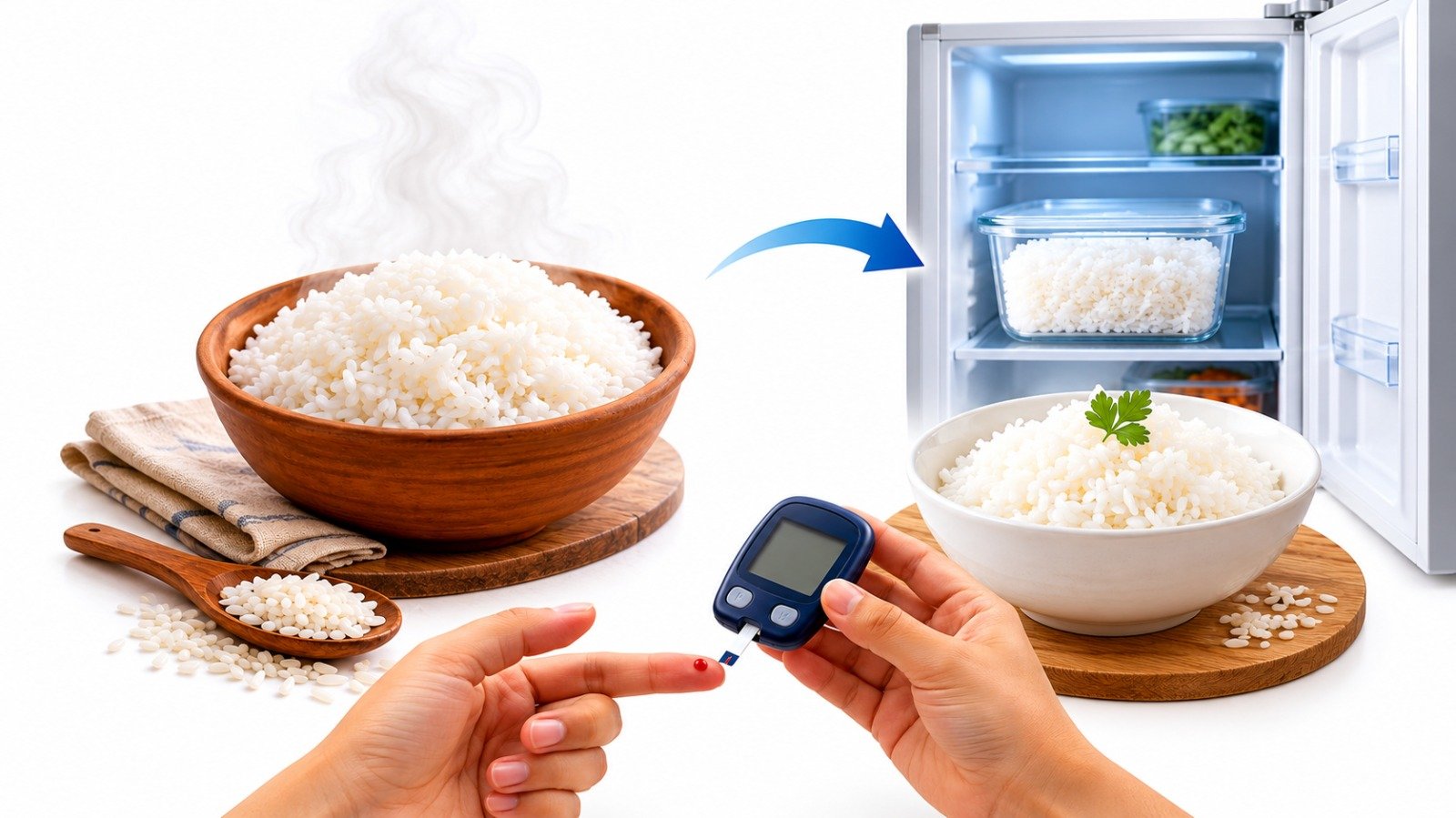
Not all rice is equal. Hand-pounded, brown, and red rice retain bran and fibre and digest more slowly than polished white rice; parboiled rice also holds an edge over polished white. Cooking method matters too — cooling cooked rice (and reheating) increases resistant starch, a mechanism our covered in detail in an earlier article on cooled rice. Basmati, despite being white, tends to produce a more moderate response than short-grain polished varieties for many people.
The most reliable approach is personal: test two hours after your usual rice meal once, using your own meter. Your individual response beats any general chart.
5. When to Be Strictest
Keep rice portions tightly controlled if your HbA1c is currently above target, if you take insulin (carbohydrate counting becomes exact science), or if you have gestational diabetes — where rice portions are typically measured and often reduced under a dietitian's plan.
Final Takeaway
Yes, you can eat rice with diabetes. Keep it to one katori per meal, choose hand-pounded, brown, red or parboiled over polished white where possible, always pair it with dal or protein and half a plate of vegetables, and walk 10–15 minutes afterwards. Rice is not the enemy — the empty, unpaired, unlimited plate is.
Sources and References
- American Diabetes Association — Standards of Care: carbohydrate amount and quality (diabetesjournals.org/care)
- ICMR–National Institute of Nutrition — Dietary Guidelines for Indians, staple grain guidance (icmr.gov.in)
- World Health Organization — Healthy diet fact sheet (who.int)
- Research Society for the Study of Diabetes in India (RSSDI) — Diet recommendations (rssdi.in)
Medical disclaimer: This article is for information and education only. Portion and targets should be individualised with your doctor or dietitian.
Looking for a Diabetes Specialist Near You?
Consult verified diabetologists for HbA1c control, personalized diet management, insulin therapy, and complications screening. Direct clinic contacts and WhatsApp assistance — zero booking fees.