
Rice is an integral part of the Indian diet. From steamed rice with dal and vegetables to curd rice, lemon rice, pulao and festive meals, rice is often at the centre of the plate. For people living with diabetes, however, rice is frequently viewed with concern because freshly cooked white rice can raise blood glucose relatively quickly.
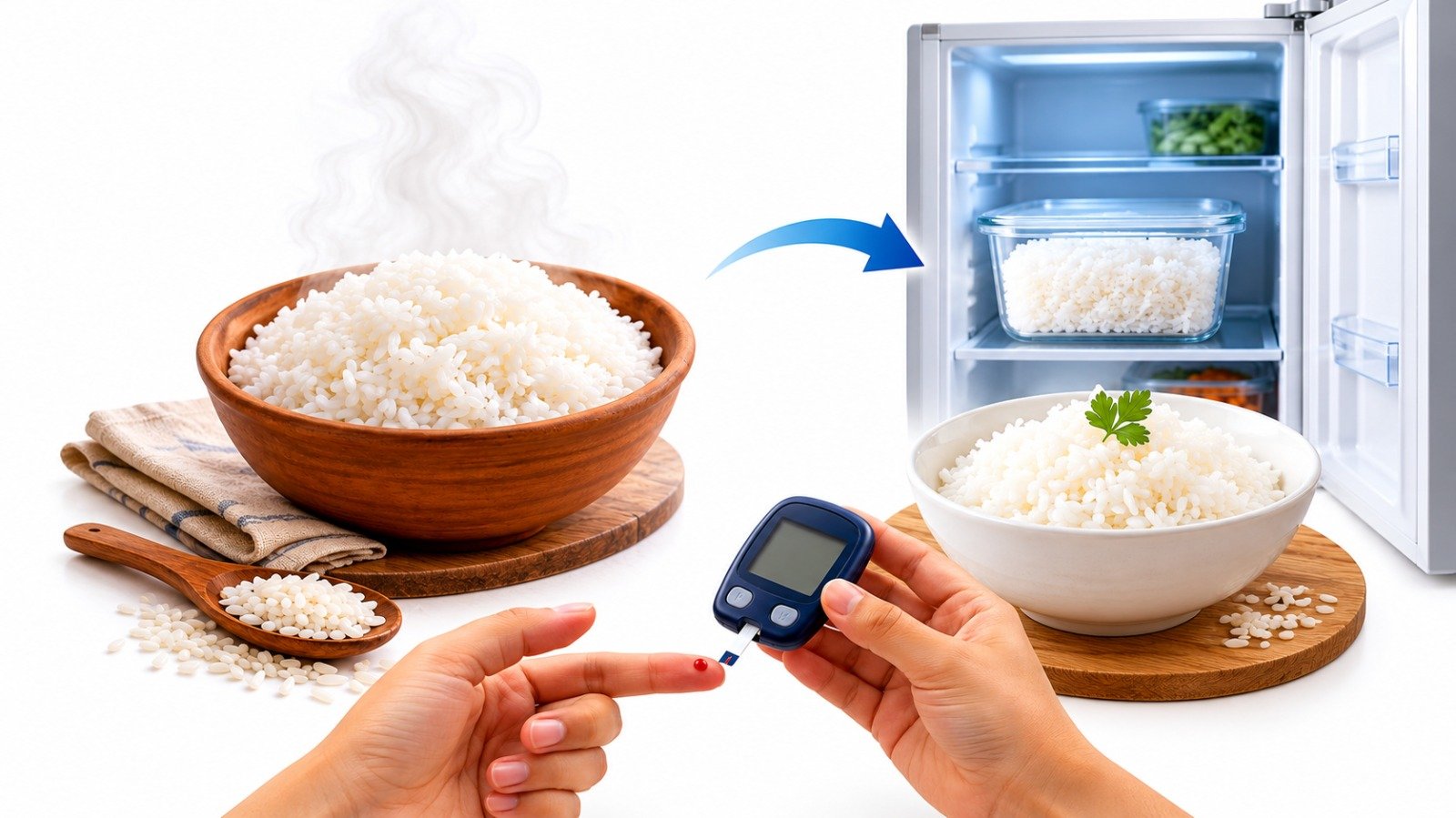
Interestingly, the way we cook, cool and consume rice may influence how our body digests its carbohydrates. One increasingly discussed strategy is cooking rice, cooling it in the refrigerator and eating it later, sometimes after reheating.
The science behind this relates to a special form of carbohydrate called resistant starch.
But does cooled rice really help people with diabetes? Can it be reheated safely? And does it mean you can eat more rice?
Let us look at the evidence in a balanced, practical way.
Refrigerating cooked rice may increase its resistant starch content and modestly reduce the post-meal glucose response in some people. However, the effect varies, and portion size, overall meal composition and food safety remain essential.
1. What Happens When Cooked Rice Cools?
When rice is freshly cooked, much of its starch becomes accessible to digestive enzymes. These enzymes break down starch into smaller carbohydrates and glucose, which is absorbed into the bloodstream.
As cooked rice cools, particularly during refrigeration, part of its starch undergoes a structural change called retrogradation.
During retrogradation, starch molecules realign into a more tightly packed structure. Some of this starch becomes resistant starch type 3 (RS3).
Resistant starch is not completely digested in the small intestine. A portion reaches the large intestine, where gut bacteria ferment it.
Why Does Resistant Starch Matter?
Because some starch becomes less accessible to digestive enzymes, the amount of rapidly digestible carbohydrate may decrease. This can potentially moderate the glucose response after a meal.
Important: Cooling does not remove all the carbohydrates from rice. Most of the carbohydrate remains digestible.
2. Can Cooled Rice Lower the Glucose Rise?
Potentially, yes, but the benefit is generally modest and not guaranteed.
Small studies have reported lower post-meal glucose responses after consuming cooled rice compared with freshly cooked rice. A randomised crossover study in people with type 1 diabetes found that rice refrigerated for 24 hours and then reheated produced a lower glucose peak and a smaller overall glucose response than freshly cooked rice.
However, findings from a small study cannot establish that the same benefit will occur in everyone with diabetes. Responses depend on several factors.
- The type and variety of rice.
- The cooking method and amount of water used.
- The duration and temperature of cooling.
- Whether the rice is reheated.
- The portion consumed.
- The vegetables, protein and other foods eaten with the rice.
- Individual glucose regulation, medicines, insulin and physical activity.
What Should You Expect?
Cooling rice is a possible additional strategy, not a reliable way to prevent glucose spikes. Your own response may differ from that observed in a study.
3. Does Reheating Destroy Resistant Starch?
Many people assume that reheating cooled rice reverses all its benefits. Fortunately, this is not necessarily the case.
Reheating cooled rice does not automatically eliminate all the resistant starch formed during refrigeration. In the type 1 diabetes study described earlier, rice was refrigerated for 24 hours and then reheated before consumption, yet a lower glucose response was observed compared with freshly cooked rice.
However, reheating can reverse some of the structural changes associated with retrogradation. The final resistant starch content depends on the rice variety, cooling conditions and reheating method.
A Practical Preparation Method
- Cook rice thoroughly as usual.
- Transfer the cooked rice into clean, shallow containers so it cools quickly.
- Refrigerate promptly rather than leaving the rice at room temperature for prolonged periods.
- Keep it refrigerated until you are ready to eat.
- Reheat only the portion you need, until it is steaming hot throughout.
There is no need to eat rice cold to obtain a possible benefit. Properly reheated rice may retain some resistant starch.
4. Resistant Starch and Gut Health
Resistant starch behaves somewhat like dietary fibre. Because it resists digestion in the small intestine, it reaches the colon, where gut bacteria ferment it.
This fermentation produces short-chain fatty acids (SCFAs), including butyrate. Butyrate serves as an energy source for cells lining the colon and contributes to the intestinal environment.
Research is exploring the potential effects of resistant starch on:
- Gut microbiome composition and activity.
- Normal bowel function.
- Satiety and appetite regulation.
- Post-meal glucose responses.
- Metabolic health over time.
These benefits should not be overstated. Cooling rice alone has not been shown to prevent diabetes, reverse established diabetes or guarantee weight loss. Overall dietary quality and long-term habits matter much more than a single preparation technique.
5. Portion Size Still Matters Most
Even if cooled rice contains more resistant starch, it still provides carbohydrate. A large serving can cause a substantial rise in blood glucose.
Your glucose response depends on several interconnected factors:
- Total carbohydrate intake and portion size.
- Rice variety and degree of processing.
- The fibre, protein and fat content of the overall meal.
- Physical activity, sleep, stress and illness.
- Diabetes medicines or insulin.
- Your individual glucose response.
How to Build a More Balanced Indian Rice Meal
Rice in Moderation
Choose a portion appropriate to your carbohydrate needs rather than filling most of the plate with rice.
Vegetables
Add a generous serving of fibre-rich vegetables, such as beans, greens, gourds, carrots or cauliflower.
Protein-Rich Foods
Include dal, sambar, rajma, chana, curd, eggs, fish, chicken, paneer or soya according to your preferences.
Additional Fibre
Include salad or other suitable vegetables alongside the meal to improve overall dietary quality.
For example, instead of eating a large bowl of rice with a small amount of curry, consider a moderate portion of rice accompanied by vegetables, dal and a suitable protein source.
Choosing less-polished or higher-fibre varieties, such as brown rice, hand-pounded rice or parboiled rice, may offer additional benefits for some people. However, these varieties can still raise glucose, and individual responses differ.
6. Food Safety: Do Not Skip This Step
Why Improperly Stored Rice Can Be Dangerous
Cooked rice can contain spores of Bacillus cereus, a bacterium that may survive cooking. When rice is left at room temperature, the bacteria can multiply and produce toxins. Some toxins may remain active even after reheating.
Cooling rice is not the same as storing it safely. Follow these precautions to reduce the risk of foodborne illness.
- Cool rice promptly in shallow containers.
- Refrigerate within 1–2 hours of cooking; sooner is preferable, especially in hot weather.
- Keep the refrigerator at 5°C or below, ideally around 4°C.
- Store rice in a clean, covered container.
- Use refrigerated rice promptly. A conservative household approach is to consume it within 24 hours.
- Reheat thoroughly until steaming hot throughout, and avoid repeated cooling and reheating.
- Discard rice that has been left at room temperature for too long. Do not rely on smell or appearance to determine whether it is safe.
For people with diabetes, foodborne illness can complicate glucose management. Safe storage is therefore just as important as the potential nutritional benefit.
7. A Caution for People Using Insulin
If you use insulin or medicines that stimulate insulin release, such as sulfonylureas, pay attention to your glucose readings when changing how you prepare rice.
A lower glucose response than expected may contribute to hypoglycaemia if your medication regimen is not suited to the meal. In the small type 1 diabetes study mentioned earlier, cooled and reheated rice was associated with more post-meal low-glucose episodes when the same insulin dose was used.
What Should You Do?
- Monitor your glucose according to your clinician's advice.
- Pay attention to recurring low readings after meals.
- Do not reduce or stop prescribed medication independently.
- Discuss repeated glucose changes with your endocrinologist, diabetes educator or dietitian.
People using continuous glucose monitoring (CGM) may find it useful to compare their glucose response to similar meals prepared in different ways, while keeping portions and other meal components as consistent as practical. A few observations do not replace an individualised treatment plan.
8. Frequently Asked Questions
Does Refrigerated Rice Have a Lower Glycaemic Impact?
It may have a lower post-meal glucose impact in some circumstances because cooling can increase resistant starch. The effect varies, and cooling does not guarantee a low glycaemic response.
How Long Should Rice Be Refrigerated?
Some studies have examined rice refrigerated for 24 hours. This does not mean everyone needs to wait exactly 24 hours. Cool and refrigerate rice promptly, and follow safe storage practices.
Can I Eat Cooled Rice Without Reheating It?
Rice that has been cooked, rapidly cooled and continuously refrigerated can be eaten cold if desired. However, safe handling is essential. Reheating until steaming hot throughout is a practical option for most meals.
Is Cooled Rice Better Than Brown Rice?
There is no universal winner. Brown, hand-pounded and parboiled rice may provide different fibre and starch characteristics. Cooling may also affect resistant starch. Portion size and your personal glucose response remain important.
Can People With Diabetes Eat Rice Every Day?
Many people with diabetes can include rice in a balanced eating plan. The appropriate quantity depends on individual carbohydrate requirements, glucose control, activity and treatment. A diabetes dietitian can help determine a suitable portion.
Can Cooled Rice Reverse Diabetes or Prevent Glucose Spikes?
No. Cooled rice is not a treatment for diabetes and cannot guarantee that glucose spikes will be prevented. It may be one small part of a broader nutrition and diabetes management strategy.
9. The Practical Takeaway
Managing diabetes does not always require giving up familiar foods. Sometimes, changing how a food is prepared can influence how the body digests it.
Cooking rice, cooling it promptly in the refrigerator and eating it later, either cold or properly reheated, may increase its resistant starch content and modestly reduce its glycaemic impact.
However, the evidence is still limited, individual responses vary, and food safety must never be compromised.
Combine sensible rice portions with vegetables, protein-rich foods, regular physical activity, adequate sleep and appropriate medical care. These consistent habits are more important than relying on any single dietary technique.
Before making major dietary changes, particularly if you use insulin or medicines that can cause hypoglycaemia, seek personalised advice from your endocrinologist, diabetes educator or registered dietitian.