Festival of Lights Sweets for Diabetics: Which Are Safer and How Much?

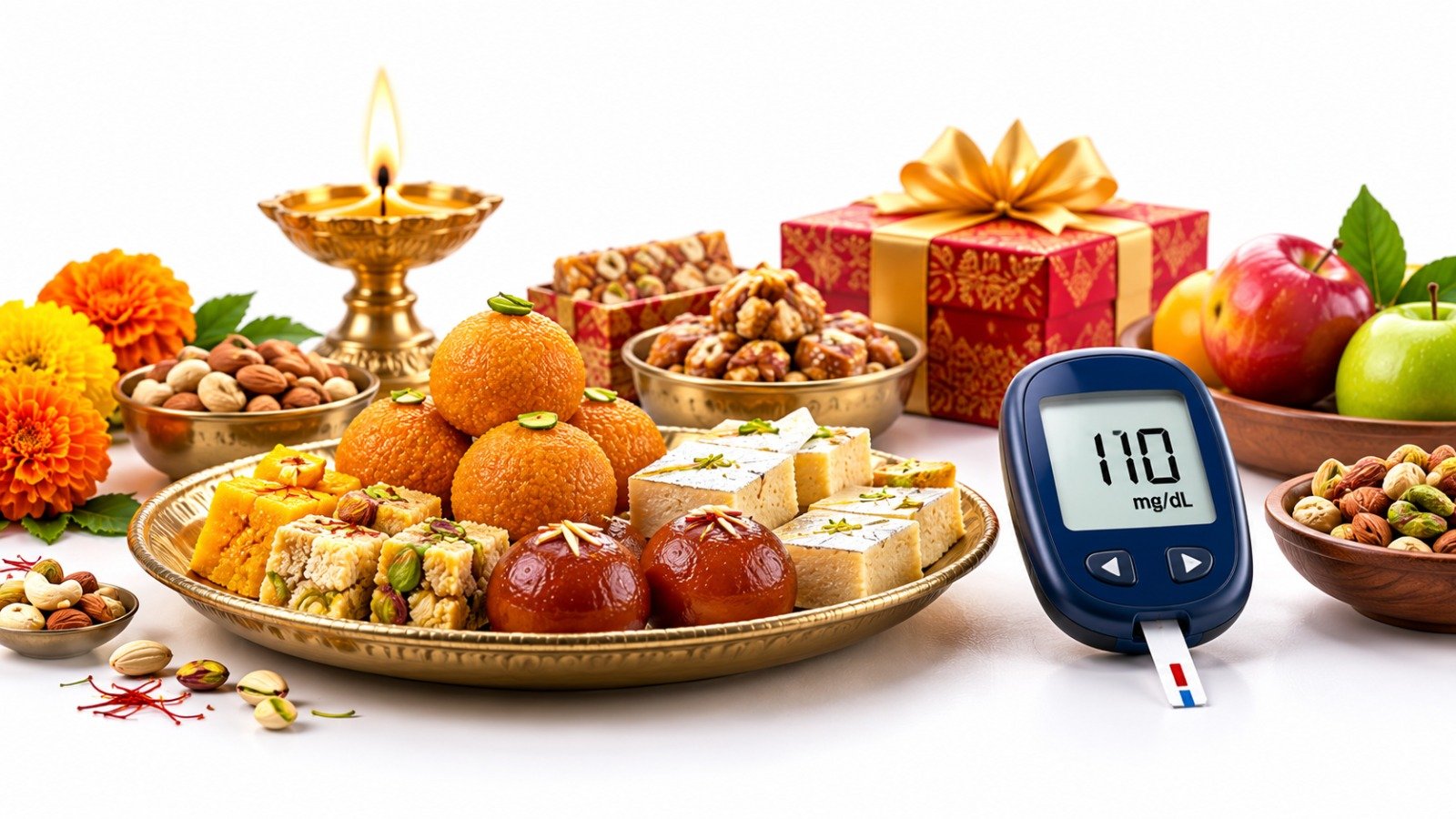
Festival seasons in India run on sweets. Boxes of mithai arrive at every doorstep, plates go around at every office and puja, and saying no feels almost impolite — especially during the Festival of Lights, when sharing sweets is part of the celebration itself. For a person living with diabetes, this is the time of year when food feels most complicated.
The good news: no Indian sweet has to be completely off the table. What decides whether your glucose stays steady or shoots up is not one magical "safe" sweet — it is which sweet you choose, how big the piece is, what you eat it with, and what you do afterwards. This guide breaks down the science behind festival spikes and gives you rules you can actually follow.
1. What Actually Drives the Spike
Most Indian sweets combine three things: fast carbohydrate (sugar, and often refined maida), fat (ghee or oil), and — in many cases — liquid or semi-liquid form. The carbohydrate is what raises blood glucose; the fat slows absorption but does not prevent the rise, it only delays it. That is why a rich sweet can push your sugar up two to three hours after eating it, long after the celebration is over.
What makes one sweet safer than another
- Total carbohydrate per piece — the single biggest factor
- Refined flour (maida) — raises glucose faster than flour made from whole grains or pulses
- Fibre, nuts and seeds — slow absorption and add nutrients
- Depth of frying and syrup soaking — adds fat and concentrated sugar on top of the carbohydrate
- Portion size — a smaller piece of a "risky" sweet often beats a large piece of a "safe" one
Research summarised in the American Diabetes Association's Standards of Care supports individualised carbohydrate intake rather than blanket food bans — the goal is matching insulin or medication to the carbohydrate you actually eat, not eliminating celebration from your life.
2. Sweets Compared: From Lower to Higher Impact
There is no officially "diabetic" mithai, but sweets differ in how hard they hit. Roughly, in order of increasing impact:
- Nut and dry-fruit based sweets (dry-fruit laddoo, date and nut bars) — the fibre, protein and fat from nuts slow the rise; still energy-dense, so one small piece
- Besan or lentil-flour sweets (besan laddoo, mysore pak) — besan digests slower than maida, but sugar, ghee and portion size still count
- Milk-based sweets (kheer, rasmalai, sandesh) — the milk protein helps, but kheer made with rice is essentially a bowl of fast carbohydrate
- Refined-flour, deep-fried, syrup-soaked sweets (jalebi, gulab jamun, imarti) — maida plus frying plus sugar syrup; the hardest combination for glucose control
For perspective: a single piece of a syrup-soaked sweet can carry around20–30 grams of carbohydrate, and a standard laddoo roughly15–25 grams — often close to an entire meal's worth of carbohydrate in two bites. "Sugar-free" versions replace sucrose with other sweeteners but keep the maida and ghee, so they are not automatically safe either.
3. How Much Is Safe: Portion and Timing Rules
There is no universal safe number — targets are individual — but these rules work for most people with type2 diabetes:
- One small piece (about30–40 grams), once on the festival day, not unlimited rounds through the evening
- Never on an empty stomach — eat the sweet at the end of a balanced meal that has protein and vegetables, not as a standalone snack between meals
- Keep your regular medication and timing unchanged — do not skip or adjust doses to "make room" for sweets without talking to your doctor
- Take a10–15 minute walk after — studies published in Diabetes Care show that light activity after a meal lowers post-meal glucose more effectively than the same walk done earlier in the day
- Check your glucose two hours after — your own response to one piece of rasgulla tells you more than any general chart; use it to plan the next festival
If you use insulin or a sulfonylurea medicine, timing matters even more: matched dosing and consistent carbohydrate timing reduce the risk of a late-night low after an unusually sweet evening. And keep fast-acting glucose (3–4 glucose tablets or15 grams of plain sugar) ready for a genuine hypo — mithai and chocolate are poor hypo treatments because fat and protein slow the sugar down when you need it in minutes.
4. The Indian Context: Buffets, Gifts and Social Pressure
Festival eating in India is not a private decision. Sweet boxes are gifted, refusing a homemade laddoo can feel like refusing the host, and meals stretch across three or four households in a day. Two practical strategies help: eat a small protein-rich snack before heading out (a boiled egg, roasted chana, a glass of buttermilk) so you are never starving in front of the dessert table; and accept the box with a smile, take one piece, and carry the rest home — where portion control is entirely in your hands.
If you are also fasting for religious reasons, the combination of fasting plus feasting is a bigger glucose risk than the sweets alone — that deserves its own plan and a conversation with your doctor before the festival begins.
5. Special Caution for Insulin and Sulfonylurea Users
People on insulin or medicines that stimulate insulin release (such as glibenclamide) need the most planning: the same sweet eaten with the wrong dose timing can cause both a sharp rise and a delayed low. Carry a snack, wear or carry identification, and never change your regimen just because it is festival week — plan the changes with your diabetologist in advance, not on the day.
Children, elderly family members with diabetes, and anyone with kidney or eye complications should keep portions smaller still and prioritise home-made, less syrup-heavy options.
Final Takeaway
Festival sweets do not have to be forbidden — they have to be planned. Choose nut- or lentil-based sweets over syrup-soaked refined-flour ones, keep it to one small piece at the end of a proper meal, walk for10–15 minutes afterwards, keep your medicines unchanged, and test two hours later to learn your own response. Celebrations come every year; steady glucose through them is the real gift you give yourself.
Sources and References
- American Diabetes Association — Standards of Care in Diabetes: nutrition and carbohydrate management (diabetesjournals.org/care)
- World Health Organization — Free sugars intake guideline (who.int)
- ICMR–National Institute of Nutrition — Dietary Guidelines for Indians (icmr.gov.in)
- Research Society for the Study of Diabetes in India (RSSDI) — Clinical practice recommendations (rssdi.in)
Medical disclaimer: This article is for information and education only. It does not replace examination, diagnosis or treatment by a qualified doctor. Medication doses must never be changed without your doctor's advice.
Looking for a Diabetes Specialist Near You?
Consult verified diabetologists for HbA1c control, personalized diet management, insulin therapy, and complications screening. Direct clinic contacts and WhatsApp assistance — zero booking fees.