Indian Diabetes Risk Score: Check Your Risk in 2 Minutes

Most people discover they are at risk for diabetes only after a fasting test comes back high. The Indian Diabetes Risk Score (IDRS) flips that sequence: it is a simple questionnaire, developed in Chennai by the Madras Diabetes Research Foundation and widely promoted by RSSDI, that estimates your risk in about two minutes using four questions — before any laboratory test is needed.
It was built specifically on Indian populations, which matters: Asian Indians develop diabetes at lower body weights and younger ages than Western populations, so risk tools built abroad under-detect risk here. The IDRS is one of the few scores validated for Indian use.
1. The Four Questions That Make Up the Score
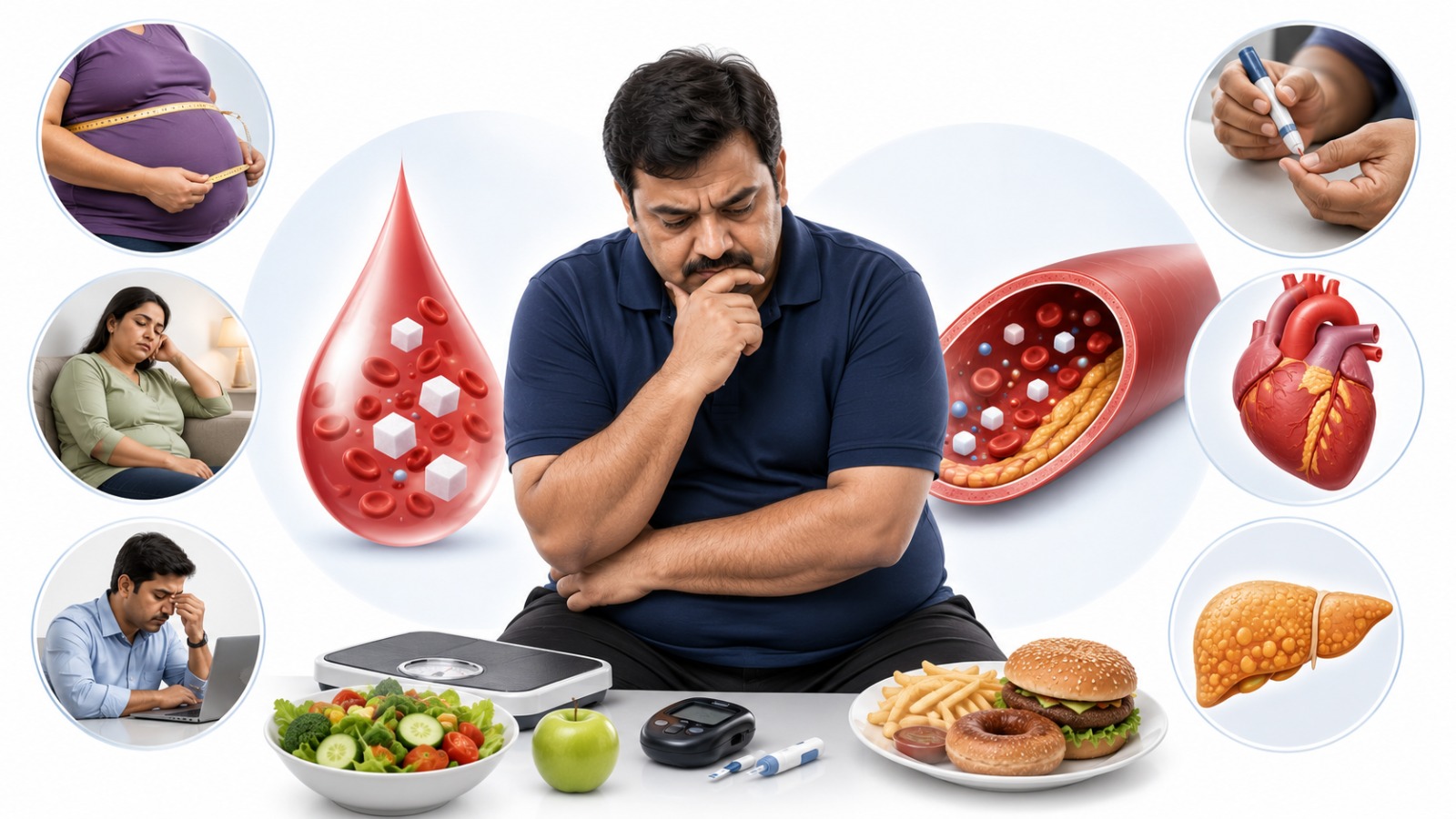
The score is built from four everyday facts about you:
- Age — risk rises after 35, and again after 50
- Waist circumference — measured at the navel; central fat is the strongest body-shape signal of insulin resistance in Indians (male ≥ 90 cm, female ≥ 80 cm already counts against you)
- Physical activity — sedentary days score worse than moderate or vigorous activity; this covers both leisure exercise and the activity built into your workday
- Family history — diabetes in a parent or sibling meaningfully raises your probability of developing it
Each answer adds points; the total runs on a scale where roughly 4–5 is moderate risk, 6–7 is high risk, and 8 or above is very high risk (thresholds are slightly higher for people over 60). Scores of 6 or more are the practical trigger: that is where guided testing — fasting glucose plus HbA1c — is recommended rather than optional.
2. Why the Four Factors Are Not Random
All four map onto the same biology. Central waist fat reflects visceral fat, which drives insulin resistance. Age reflects the progressive decline in beta-cell function. Inactivity means muscles take up less glucose without insulin. Family history carries both genetic susceptibility and shared household habits. Together they predict what a single lab test only measures at one moment in time.
3. What to Do With Your Score
- Low (3 or less): recheck yearly — keep activity and weight stable
- Moderate (4–5): test fasting sugar and HbA1c now, then retest annually
- High or very high (6+): test immediately, and if results are in the prediabetes or diabetes range, see a physician or diabetologist the same month
- Anyone with a prior high reading, gestational diabetes history, or PCOS: test regardless of score
The score does not diagnose anything — it decides who deserves a test sooner. That decision, made in two minutes without a needle, is exactly why the IDRS was designed for Indian primary care.
Final Takeaway
Age, waist, activity and family history are four questions that can be answered right now. If your Indian Diabetes Risk Score reaches 6, treat it as a call to book a fasting glucose and HbA1c test this week. Knowing your risk before symptoms appear is the cheapest medicine there is.
Sources and References
- Madras Diabetes Research Foundation — development and validation of the Indian Diabetes Risk Score (icmr.gov.in — Indian population research)
- Research Society for the Study of Diabetes in India (RSSDI) — Screening recommendations for Indian adults (rssdi.in)
- American Diabetes Association — Standards of Care: risk-based screening (diabetesjournals.org/care)
- World Health Organization — Diabetes fact sheet (who.int)
Medical disclaimer: This article is for information and education only. It is a risk screen, not a diagnosis. Test results must be interpreted by a qualified doctor.
Looking for a Diabetes Specialist Near You?
Consult verified diabetologists for HbA1c control, personalized diet management, insulin therapy, and complications screening. Direct clinic contacts and WhatsApp assistance — zero booking fees.