Festival Season Blood Sugar Plan: Enjoy Celebrations Without a Sugar Spike
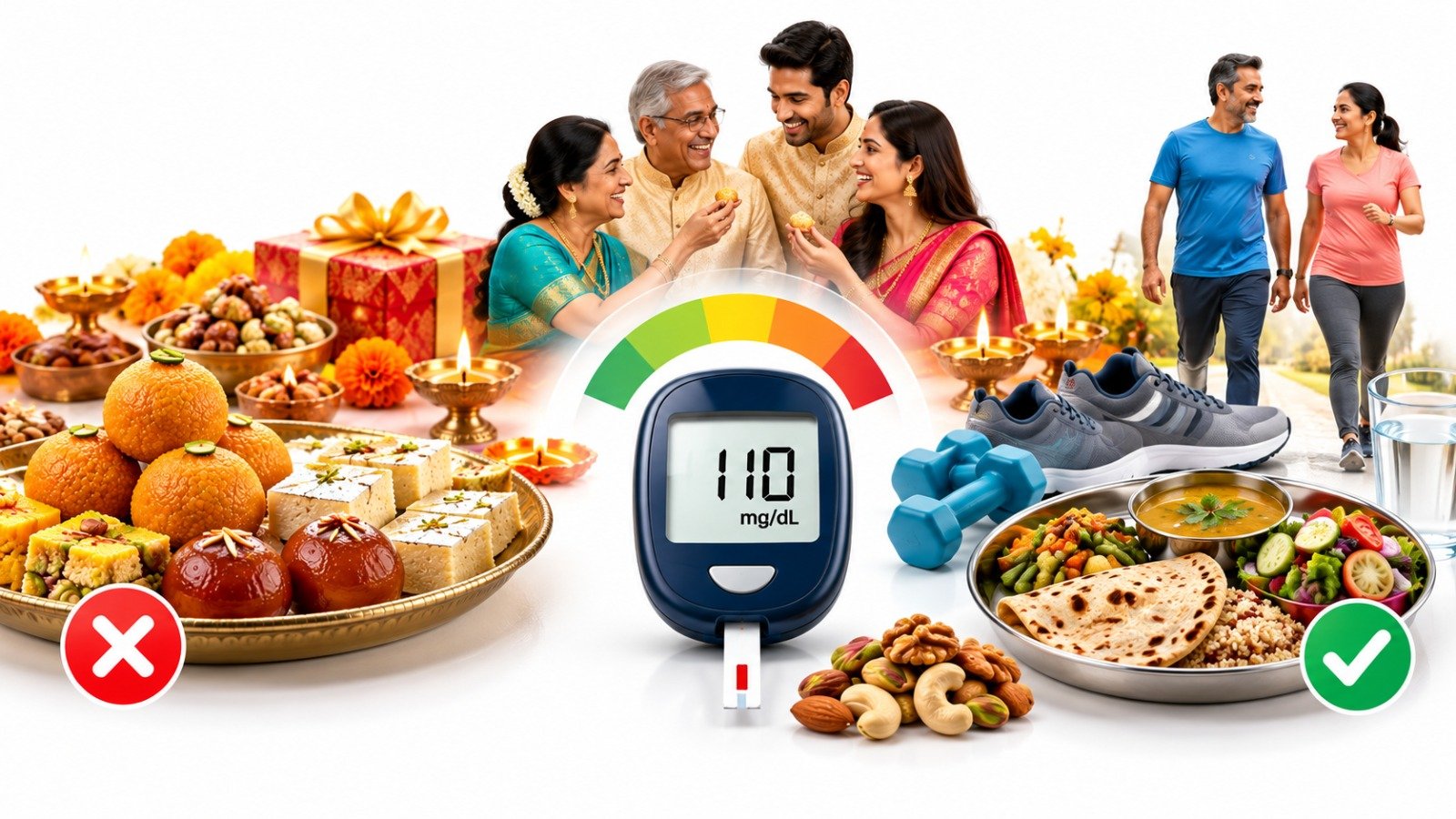
Festival season in India rarely means one party. There is the office celebration, the neighbour's dessert drop, the wedding down the road, and the family gathering that stretches past midnight — each with its own plate of sweets. For people living with diabetes, the challenge is not one meal; it is a whole season of them. This plan turns the season into something you can navigate instead of endure.
The goal is not perfect glucose through every event. It is keeping the overall trend steady while still taking part — fewer big spikes, no missed medicines, no skipped monitoring. Here is a practical, evidence-aligned plan in five parts.
1. Before the Event: Three Preparation Moves
- Eat a real base meal before you leave home. A small meal with protein and fibre — two eggs, a bowl of dal, roasted chana, curd — means you arrive satisfied rather than starving in front of a dessert table
- Know your medicine timing. If you take insulin or a sulfonylurea, confirm with your doctor how to handle a heavier-than-usual meal; do not improvise dose changes on the day
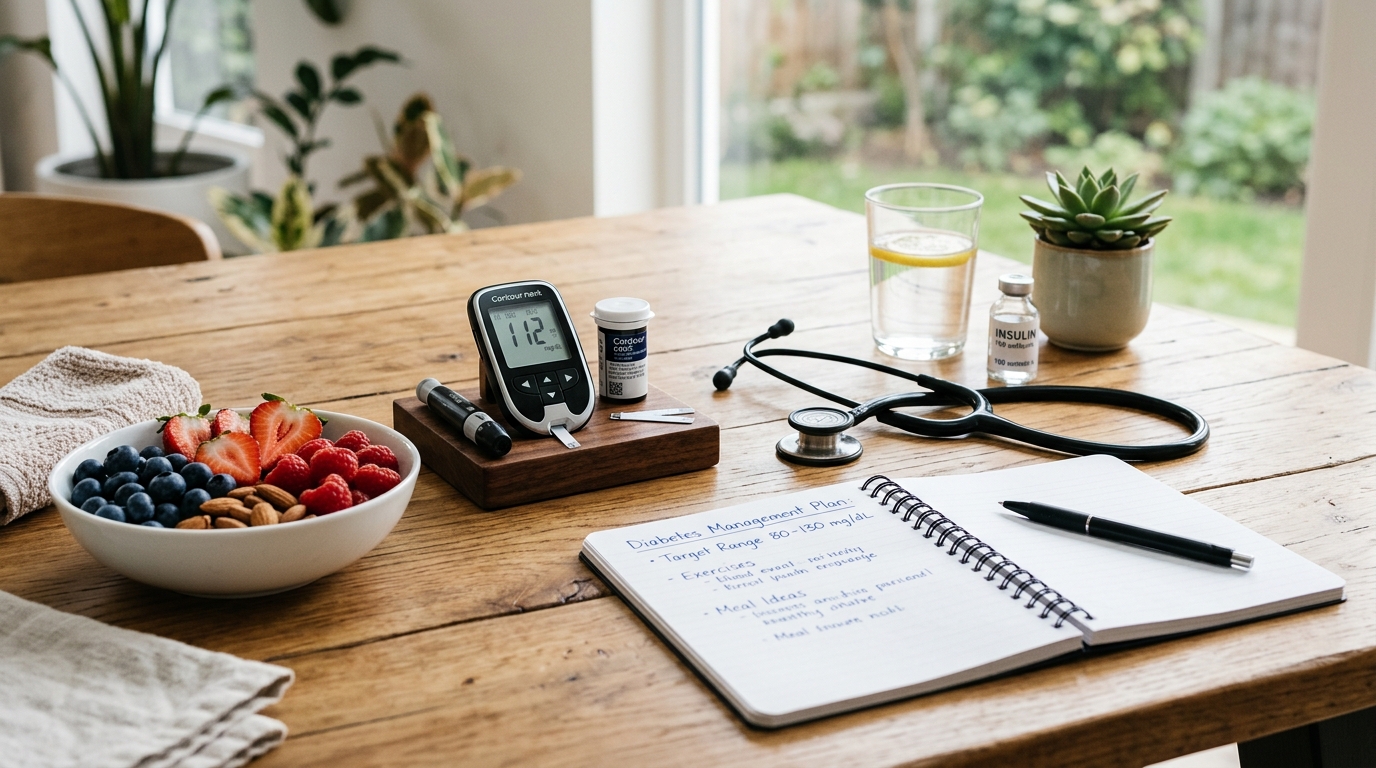
- Carry your kit: glucose meter or CGM, medicines, a dated snack, and fast-acting glucose (3–4 glucose tablets) for a genuine low
The American Diabetes Association's Standards of Care emphasise individualised meal planning rather than food bans — preparation is what makes flexibility safe.
2. At the Buffet: The Indian Plate Method
Festival meals are often buffet-style, which is actually an advantage. Build your plate in this order:
- Half the plate: vegetables and salads (without sugary dressings or fried papadums counted as "veg")
- One quarter: protein — paneer, chicken tikka, fish, dal, chana, eggs
- One quarter: carbohydrate — rice, roti, biryani, or the sweet you planned for
- Start with the protein-vegetable half; by the time you reach the carbohydrate section, the edge is off your appetite
Fried starters are the hidden trap: samosa, kachori and pakora combine refined flour and deep frying in two or three bites of the meal's entire fat budget. Choose tandoori or grilled items instead.
3. The Sweet Rule: One Piece, End of Meal, Then Walk
Sweets belong at the end of the meal, not between meals on an empty stomach. One small piece — a laddoo, a piece of barfi, two small gulab jamun are NOT two servings — counts as part of your carbohydrate allowance for that meal. Follow it with a 10–15 minute walk; research in Diabetes Care shows light activity after eating lowers the post-meal glucose rise more effectively than the same walk earlier in the day.
4. Late Nights, Travel and Alcohol
Late nights shift meal and medicine schedules; keep alarms for medicines rather than relying on memory at1 AM. If you do not drink, a festival is not the reason to start. If you do drink, remember the classic risk: alcohol can drop blood sugar hours later, especially with insulin or sulfonylurea medicines — never drink on an empty stomach, never skip the evening snack, and never increase insulin to "cover" a night of drinking without your doctor's guidance.
5. Monitor: The Two Readings That Teach You Most
Test once before the event and once two hours after the sweets. The second number is your personal feedback — it tells you whether that particular sweet, portion, or timing worked for YOUR body. People who test this way through one festival season learn more about their diabetes than any chart can teach.
Final Takeaway
Festival season survives on preparation: eat a protein base before you leave, build your plate vegetables-first, keep sweets to one piece at the end of the meal, walk 10–15 minutes after, keep medicines and monitoring on schedule, and take the two readings that turn every celebration into information. Enjoy the season — the plan exists so that you can.
Sources and References
- American Diabetes Association — Standards of Care: nutrition and meal planning (diabetesjournals.org/care)
- World Health Organization — Healthy diet fact sheet (who.int)
- ICMR–National Institute of Nutrition — Dietary Guidelines for Indians (icmr.gov.in)
- Research Society for the Study of Diabetes in India (RSSDI) — Clinical recommendations (rssdi.in)
Medical disclaimer: This article is for information and education only. It does not replace examination, diagnosis or treatment by a qualified doctor. Never change medicine doses without your doctor's advice.
Looking for a Diabetes Specialist Near You?
Consult verified diabetologists for HbA1c control, personalized diet management, insulin therapy, and complications screening. Direct clinic contacts and WhatsApp assistance — zero booking fees.