
Diabetes in the Elderly: Caring for Your Parents

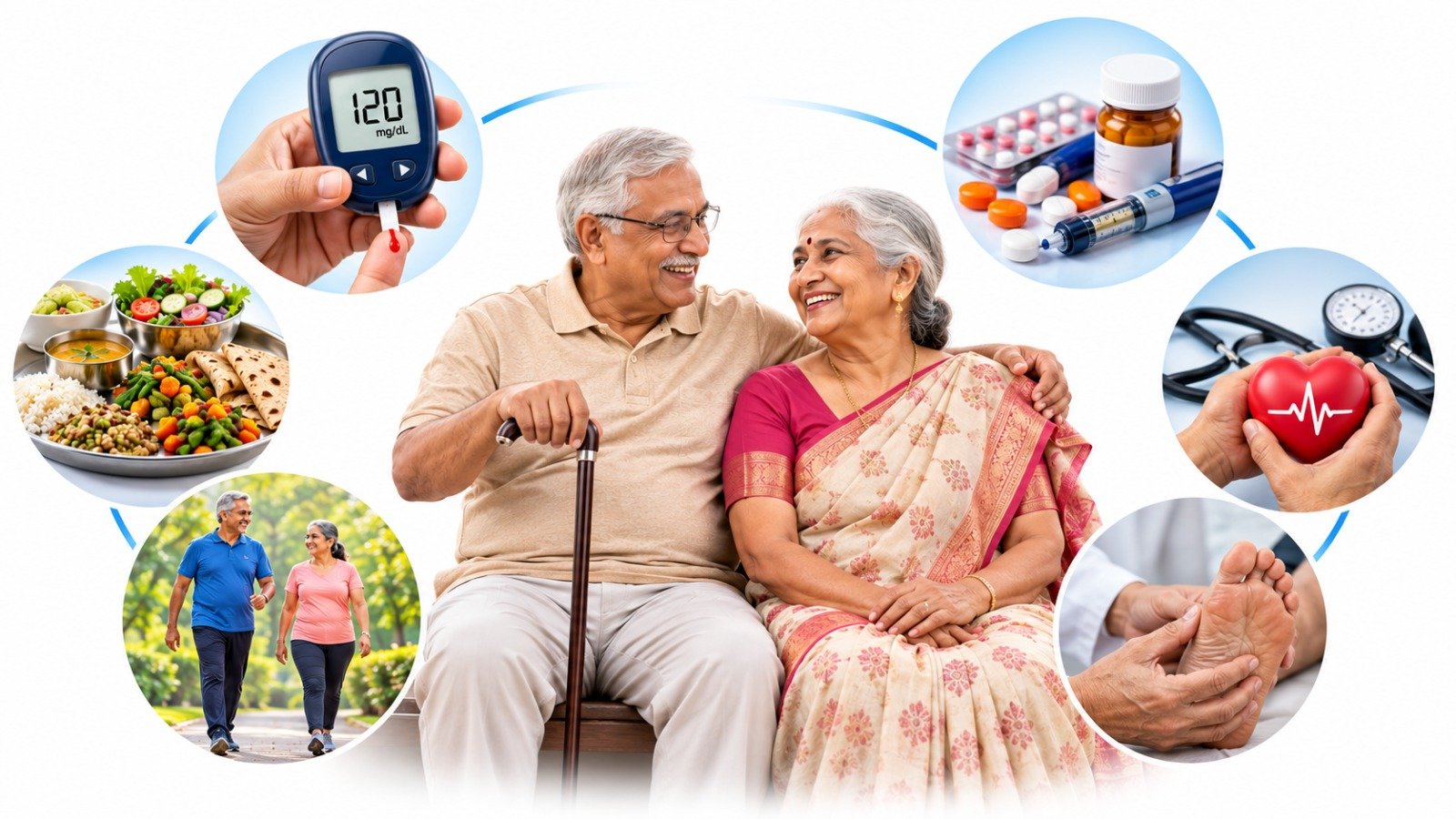
Caring for a parent with diabetes in India is rarely a single decision — it is a daily architecture of medicines, meals, tests and quiet worry, often managed alongside a job and children of your own. The risks differ from diabetes in younger adults too: hypoglycaemia becomes more dangerous, complications accumulate faster, and the caregiver's own sanity becomes part of the treatment plan.
1. The Biggest Medical Risk: Lows, Not Highs
- Hypoglycaemia in the elderly can cause falls, fractures, confusion mimicking dementia, and cardiac events — older adults often LOSE the early warning signs (shaking, sweating) that younger patients feel
- The culprits: sulfonylureas and insulin, missed or delayed meals, irregular eating during festivals and fasts, and new kidney decline slowing medicine clearance
- The caregiver move: agree target ranges with the doctor that are deliberately LOOSER for the elderly (many guidelines accept HbA1c around7.5–8% over75 with comorbidities rather than the standard7), keep fast-acting glucose within reach at home and bedside, and make meal times non-negotiable
2. Building the Daily System
- Weekly pill box: seven compartments filled once a week — the single highest-impact habit; wrong-dose days become visible immediately
- Fixed meal clock: breakfast, lunch, dinner at stable times with a mid-evening snack if on sulfonylureas — the schedule protects the medicine dose, not just the sugar
- A single shared record: one notebook or phone note for sugar readings, doctor visits and questions — Indian families often spread this across three people and lose it
- Glucometer that actually works: check strips' expiry (they expire!), control-solution test occasionally, and never share the lancing device
3. The Annual Circuit, Without Exceptions
Eyes, kidneys, feet, heart (BP + lipids), and a dental check — this circuit prevents the hospitalisations that reverse an elderly patient's independence. Feet deserve daily inspection by a family member if vision or bending is limited; nail cutting by a podiatrist or careful family clipping, never through calluses. Vaccinations (influenza, pneumococcal, and as advised COVID boosters) matter more with diabetes and age together.
4. The Emotional Layer
- Depression in elderly diabetes is common and under-detected — withdrawal, lost interest in food or temple walks, sleep change deserve the same seriousness as a high HbA1c
- Autonomy matters: involve the parent in decisions; imposed food rules ("no, you can't have that") produce secretive eating and worse control than negotiated portions
- Caregiver burnout is real: share the load among siblings with explicit rotation; a burnt-out caregiver stops the monitoring system entirely
5. Planning the Hard Conversations Early
Before an emergency: who drives to the hospital, which hospital, what records live where (HbA1c reports, medicine list, allergies, insurance papers in one folder), and what the parent's own wishes are regarding aggressive treatment. Families who discuss this calmly in advance navigate emergencies with far less damage — and the person with diabetes keeps more control over their own care.
Final Takeaway
Managing diabetes in ageing parents means prioritising safety from lows (looser targets, fixed meals, glucose always reachable), automating the daily system (weekly pill box, shared record, working glucometer), never missing the annual eye-kidney-foot circuit, watching for depression — in parent and caregiver alike — and keeping one folder ready for emergencies. The structure you build is what lets them keep living independently.
Sources and References
- American Diabetes Association — Standards of Care: older adults and hypoglycaemia (diabetesjournals.org/care)
- World Health Organization — Diabetes fact sheet (who.int)
- Research Society for the Study of Diabetes in India (RSSDI) — Elder care recommendations (rssdi.in)
- ICMR–National Institute of Nutrition — Indian dietary guidance (icmr.gov.in)
Medical disclaimer: This article is for information and education only. Targets and medicine changes for elderly patients must be set by their treating doctor.
Looking for a Diabetes Specialist Near You?
Consult verified diabetologists for HbA1c control, personalized diet management, insulin therapy, and complications screening. Direct clinic contacts and WhatsApp assistance — zero booking fees.